Партнер Miller Law Firm, Артем Крикун-Труш, коментує Закон, який дозволяє українцям мати друге громадянство без втрати українського, вже пройшов голосування в парламенті й очікує на підпис Президента.
Чому це рішення необхідне?
За межами України перебуває понад 7 мільйонів українців, які без цієї норми можуть втратити юридичний зв’язок із державою.
Закон зміцнює зв’язки з діаспорою та дає більше гнучкості в умовах війни та пов’язаної з нею еміграції.
Основна зміна: українці за кордоном зможуть офіційно оформити громадянство іншої країни й при цьому залишатися громадянами України.
Закон також передбачає спрощену процедуру набуття громадянства для іноземців, які воюють за Україну.
Закон не поширюється на осіб, які мають громадянство росії, Білорусі або інших держав, що підтримують збройну агресію проти України. Подвійне громадянство для них заборонене.
Виняток лише один:для тих, хто підтримує Україну й зазнає політичних переслідувань. Закон передбачає окреме врегулювання для таких випадків, оскільки росія фактично не дозволяє добровільно відмовитися від свого громадянства.
Разом із тим, юристи звертають увагу на складну ситуацію жителів тимчасово окупованих територій, які були змушені отримати паспорти держави-агресора. Згідно з українським законодавством, таке набуття громадянства є правопорушенням — але ці люди залишаються громадянами України.
Саме тому важливо не запроваджувати автоматичну заборону на множинне громадянство для всіх таких випадків, а встановити чіткі процедури перевірки — щоб відрізнити вимушене набуття громадянства від свідомого колаборантства.
Своєю думкою в коментарі для Радіо Свобода поділився Артем Крикун-Труш, партнер, керівник практики White-Collar Crime, комплаєнсу та розслідувань:
“Треба перевіряти й встановлювати, чи була людина колаборантом. В цій частині законопроєкт недопрацьований, бо ми фактично відмежовуємо від себе всіх громадян, які отримали паспорт рф. Тут потрібен глибший підхід — варто прописати чіткі процедури перевірки, а не вводити заборону за замовчуванням.”
Miller Law Firm’s partner Artem Krykun-Trush comments on the law that allows Ukrainians to have a second citizenship without losing their Ukrainian one, which has already passed the parliamentary vote and is awaiting the President’s signature.
Why is this solution necessary?
There are more than 7 million Ukrainians outside of Ukraine who may lose their legal ties with the state without this provision.
The law strengthens ties with the diaspora and provides more flexibility in the face of war and related emigration.
The main change is that Ukrainians abroad will be able to officially obtain citizenship of another country and still remain citizens of Ukraine.
The law also provides for a simplified procedure for obtaining citizenship for foreigners fighting for Ukraine.
The law does not apply to persons who have citizenship of Russia, Belarus or other states that support armed aggression against Ukraine. Dual citizenship is prohibited for them.
There is only one exception:for those who support Ukraine and are subject to political persecution. The law provides for a separate regulation for such cases, as Russia does not actually allow voluntary renunciation of citizenship.
At the same time, lawyers draw attention to the difficult situation of residents of the temporarily occupied territories who were forced to obtain passports of the aggressor state. According to Ukrainian law, such acquisition of citizenship is an offense – but these people remain citizens of Ukraine.
That is why it is important not to introduce an automatic ban on multiple citizenship for all such cases, but to establish clear verification procedures to distinguish between forced acquisition of citizenship and deliberate collaboration.
Artem Krykun-Trush, Partner, Head of White-Collar Crime, Compliance and Investigations Practice, shared his opinion in a commentary for Radio Liberty:
“We need to check and establish whether a person was a collaborator. In this part, the draft law is not finalized, because we are actually separating from ourselves all citizens who have received a Russian passport. A deeper approach is needed here – clear verification procedures should be prescribed, rather than introducing a ban by default.”
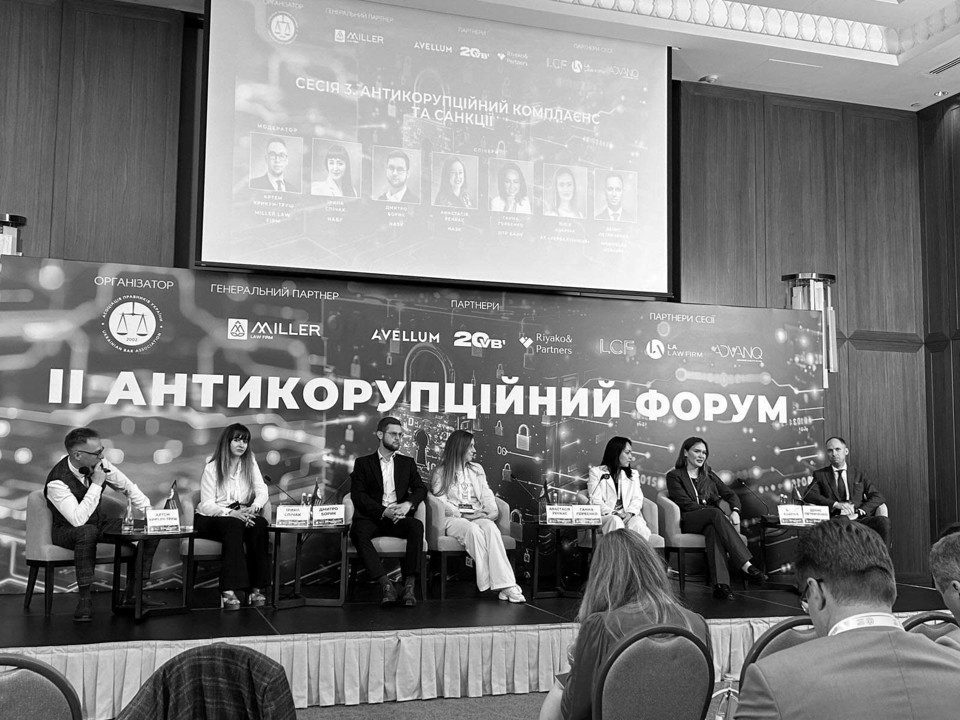
Цього тижня ми брали участь у двох масштабних івентах: круглий стіл Асоціації адвокатів України (ААУ) / Ukrainian Advocates’ Association (UAA) по обговоренню законопроєкту про кримінальну відповідальність та у II Антикорупційному форумі Асоціація правників України / Ukrainian Bar Association.
Artem-Abraham Krykun-Trush, партнер та керівник практики White-Collar Crime, комплаєнсу та розслідувань, поділився інсайтами з круглого столу:
Зараз існує нечітке визначення того, що є злочином. Розмиті критерії можуть призвести до необґрунтованих звинувачень та презумпції винуватості бізнесу. Це ризик навіть для добросовісних компаній.
Потрібно розмежувати умисні порушення санкцій від помилок у комплаєнсі, за які доцільні адміністративні штрафи.
Безстрокова відповідальність — великий ризик. Відсутність строків давності означає нескінченну загрозу для бізнесу, що суперечить принципам правової визначеності та стабільності.
Добросовісна помилка має бути підставою для звільнення від кримінальної відповідальності. Це допоможе уникнути несправедливих репресій щодо бізнесу та посадових осіб, які діяли сумлінно.
Антикорупційний форум АПУ ще раз підтвердив: бізнесу не варто чекати кризи, щоб згадати про комплаєнс. Ефективні антикорупційні політики, робота з викривачами, внутрішні розслідування та жива культура доброчесності — це не бюрократія, а запорука стійкості.
Особливо цінною була відверта дискусія між представниками державного, приватного секторів та антикорупційних органів. Такий обмін досвідом — ключ до того, щоб будувати прозоре і сильне середовище.
В’ячеслав Коломійчук, старший юрист White-Collar Crime, комплаєнсу та розслідувань Miller Law Firm був учасником панелі Military White Collar Crime.
Він поділився своїми думками: “Military White Collar Crime – новий виклик для права й оборони одночасно. Враховуючи військову специфіку, формується особлива зона ризику, в якій відповідальність командирів легко підміняють кримінальним переслідуванням, а інструменти антикорупції перетворюють на зброю політичного чи бізнесового тиску. Системі потрібно навчитися розрізняти реальні злочини й управлінські рішення, інакше ми підриваємо не лише право, а й власну безпеку.”
This week we participated in two large-scale events: a roundtable discussion of the Ukrainian Advocates’ Association (UAA) on the draft law on criminal liability and the II Anti-Corruption Forum of the Ukrainian Bar Association.
Artem-Abraham Krykun-Trush, Partner and Head of White-Collar Crime, Compliance and Investigations, shared insights from the roundtable:
Currently, there is no clear definition of what constitutes a crime. Blurred criteria can lead to unfounded accusations and presumption of guilt for businesses. This is a risk even for honest companies.
There is a need to distinguish between intentional violations of sanctions and compliance errors for which administrative fines are appropriate.
Indefinite liability is a big risk. The absence of a statute of limitations means an endless threat to business, which is contrary to the principles of legal certainty and stability.
An honest mistake should be a ground for exemption from criminal liability. This will help avoid unfair reprisals against businesses and officials who acted in good faith.
The UBA Anti-Corruption Forum has once again confirmed that businesses should not wait for a crisis to remember about compliance. Effective anti-corruption policies, whistleblower management, internal investigations, and a vibrant culture of integrity are not bureaucracy, but the key to sustainability.
The frank discussion between representatives of the public, private sectors and anti-corruption agencies was particularly valuable. This exchange of experience is key to building a transparent and strong environment.
Viacheslav Kolomiychuk, Senior Associate of White-Collar Crime, Compliance and Investigations at Miller Law Firm, participated in the Military White-Collar Crime panel.
He shared his thoughts: “Military white collar crime is a new challenge for law and defense at the same time. Given the military specifics, a special risk zone is being formed in which the responsibility of commanders is easily replaced by criminal prosecution, and anti-corruption tools are being turned into a weapon of political or business pressure. The system needs to learn to distinguish between real crimes and managerial decisions, otherwise we undermine not only the law but also our own security.”
На наше переконання бізнес не повинен очікувати, коли станеться інцидент і буде потрібно проводити внутрішні розслідування і відмиватись від підозр, обшуків та допитів. Треба вкладатись в антикорупційний комплаєнс.
Для бізнесу важливо:
щоб були ефективні внутрішні антикорупційні політики
щоб були не для “галочки” проведені внутрішні тренінги для працівників
щоб була побудована комплаєнс-система
розуміти як працювати із внутрішніми викривачами.
Ми зібрали на цій панелі коло максимально різносторонніх експертів, які представляють державні компанії, приватний та міжнародний бізнеси, та ключові антикорупційні органи для того, щоб це питання обговорити. Для того, щоб розуміти, як державні, приватні компанії та антикорупційні органи можуть бути корисні одне одному, де можуть бути точки перетинання та якому цікавому досвіду та стандартам ми можемо одне одного навчити.
Також поговоримо про антикорупційні справи у напрямку Military white-collar, які зараз набувають все більшої популярності та які не можна залишати поза увагою.
Це не чергова формальність. Це жива дискусія між тими, хто формує політику, застосовує право, впроваджує зміни: суддями, адвокатами, слідчими, комплаєнс-офіцерами, науковцями.
У програмі:
антикорупційний комплаєнс: як працюють політики, внутрішні розслідування, захист викривачів;
практика Military WCC: кейси, правові виклики, регуляторна специфіка;
санкційне право і криміналізація порушень;
міжнародне співробітництво та нові стандарти (FCPA, Bribery Act, Interpol tools).
Серед спікерів — партнер Miller Artem-Abraham Krykun-Trush (модератор антикорупційної сесії) та старший юрист В’ячеслав Коломійчук (панель про Military WCC).
Це не просто про ризики. Це про правила гри, в яких має перемагати право.
In our opinion, businesses should not wait until an incident occurs and they need to conduct internal investigations and launder themselves from suspicion, searches and interrogations. It is necessary to invest in anti-corruption compliance.
It is important for business:
to have effective internal anti-corruption policies
to ensure that internal trainings for employees are not just for show
to build a compliance system
understand how to work with internal whistleblowers.
We have brought together a panel of experts from the most diverse backgrounds, representing state-owned companies, private and international businesses, and key anti-corruption agencies to discuss this issue. In order to understand how state-owned companies, private companies and anti-corruption agencies can be useful to each other, where there may be points of intersection and what interesting experiences and standards we can teach each other.
We will also talk about anti-corruption cases in the area of military white-collar, which are now gaining popularity and should not be ignored.
This is not just another formality. This is a lively discussion between those who formulate policy, apply law, and implement changes: judges, lawyers, investigators, compliance officers, and academics.
In the program:
anti-corruption compliance: how policies, internal investigations, and whistleblower protection work;
Military WCC practice: cases, legal challenges, regulatory specifics;
sanctions law and criminalization of violations;
international cooperation and new standards (FCPA, Bribery Act, Interpol tools).
Among the speakers are Miller partner Artem-Abraham Krykun-Trush (moderator of the anti-corruption session) and senior associate Viacheslav Kolomiychuk (panel on Military WCC).
This is not just about risks. It’s about the rules of the game, in which the law must prevail.
Марія Бутіна, молодша юристка практики White-Collar Crime, комплаєнсу та розслідувань Miller Law Firm
Навіть найбіліший та прозорий підприємець сьогодні не застрахований від переслідування бізнесу та уваги правоохоронців – поліції, СБУ, БЕБ, НАБУ, ДБР чи прокуратури.
Тому, один із найменш контрольованих ризиків – це ризик кримінального переслідування, навіть якщо компанія веде діяльність абсолютно законно. Досить, щоб у ланцюгу постачань з’явився «проблемний» контрагент, – і вже є підстави для запитів, перевірок, а іноді й обшуків.
І це не обов’язково має бути ваш прямий контрагент – достатньо проблемного постачальника вашого партнера чи навіть третіх осіб. Можливе ухилення від сплати податків, фінансування підсанкційних компаній, поставки на тимчасово окуповані території або до рф – і вся ця історія вже торкається й вас.
Щоб цього уникнути, варто заздалегідь знати, які кроки може зробити бізнес для мінімізації таких ризиків. У цьому чек-листі – конкретні поради, як підготуватись і захистити компанію ще до того, як у двері постукають:
Перевіряйте своїх контрагентів:
Це насправді дуже важливо робити на початку співпраці з будь-яким постачальником, субпідрядником і тд. Достатньо лише опинитися у ланцюгу постачань або співпраці з компанією, яка стала фігурантом кримінального провадження і ви маєте ризики обшуку на підприємстві.
Тому, перевіряємо таке:
згадки у кримінальних справах (через Єдиний державний реєстр судових рішень, а також медіа й соцмережі);
наявність санкцій (в Державному реєстрі санкцій);
зв’язки з окупованими територіями або рф та податкові борги або сумнівні фінансові операції (в онлайн-сервісах).
Але тут важливо діяти не автоматикою єдиною. У більшості компаній комплаєнс-перевірка контрагентів закінчується на тому, що фінансист, комплаєнс-офіцер чи юрист-інхаус раз прогнав його через платформи. Але на практиці це не знижує ризики – навпаки, створює ілюзію безпеки.
Реальна перевірка – це додатковий доторк руки живого професіонала у вигляді OSINT, бізнес-розвідки та найголовніше – висновків про ризики та конкретні рекомендації.
Тобто:
аналіз непрямих зв’язків бенефіціарів (через офшори, дружні компанії, пов’язаних осіб);
аналіз публічних згадок в медіа, зокрема, регіональних і спеціалізованих;
використання професійного вузькопрофільного ПО та інструментів розвідки, які дозволяють виявити крос-профілі, цифрові сліди й участь у неочевидних кейсах;
пошук через неочевидні й платні джерела (наприклад, реєстри інших країн, якщо діяльність має транскордонний елемент);
аналіз стилю поведінки контрагента через інтерв’ювання попередніх партнерів, якщо йдеться про великі контракти.
Остаточну оцінку ризику має давати не алгоритм, а людина з досвідом, яка здатна побачити сигнали, що залишаються поза межами відкритих баз.
Формалізуйте відносини з контрагентами:
Усе, що не зафіксовано – не існує: у сучасних реаліях навіть скріншот повідомлення з месенджера, де ви погодили умови угоди, може стати важливим доказом у випадку кримінальної справи чи судового спору. Але краще не ризикувати – не ведіть жодних критичних перемовин лише «на словах». Усі ключові домовленості повинні мати письмову форму.
Це ваша страховка, тому:
усі ключові домовленості – лише у письмовій формі;
прописуйте зрозумілі умови договорів, деталізуйте все: вартість, межі відповідальності, комунікацію (в якій формі вона відбувається);
зберігайте листування, записів перемовин (за згодою сторін).
Майте в штаті або «на підхваті» свого адвоката:
Не «на випадок проблем», а як елемент системи безпеки вашого бізнесу, який має працювати на випередження, а не після того, як вже є повістка на допит або до вас заходь з обшуком.
брати участь у ключових переговорах або переглядати важливі договори до підписання;
інструктувати вашу команду у разі отримання запитів правоохоронців, обшуків, допитів.
буде на зв’язку 24/7 та мати чітку систему реагування у критичних ситуаціях.
Проводьте навчання у команді:
У критичних ситуаціях – під час обшуку, вручення повістки чи запиту від правоохоронців – реакція співробітників має бути не імпровізацією, а відпрацьованим алгоритмом. Неправильні дії чи зайві слова можуть коштувати компанії репутації та грошей, тому:
проводьте час від часу практичні тренінги, наприклад, «як діяти під час обшуку» та розробіть алгоритм:
хто відкриває двері та перевіряє документи в правоохоронців;
хто першим телефонує адвокату;
хто має право офіційно комунікувати з правоохоронцями від імені компанії.
Обережно працюйте з державними коштами:
Якщо ваш бізнес має справу з державними коштами (бере участь в публічних закупівлях), то маєте розуміти, що постійно перебуваєте в зоні ризиків. Проте, якщо ви ці ризики розумієте, то можете ефективно ними керувати.
Завжди звертайте увагу на таке та не беріть участь в закупівлі, якщо:
дуже завищена вартість послуг або робіт замовником: Якщо ціна занижена, то зрозуміло, що постачальники будуть відсутні, а торги скасовані. Що не можна сказати про завищення ціни, адже воно призводить до закупівлі товарів або робіт за завищеними цінами та несе за собою розтрату бюджету;
є дискримінація учасників: умови або вимоги, які навмисно створюють перевагу або обмежують можливості конкретних учасників тендеру. Це призводить до неможливості чесно конкурувати на аукціонах та створює невигідне середовище для бізнесу;
у вас вимагають «відкати»: участь у такій змові є серйозним корупційним ризиком;
є змова між учасниками: змова між учасниками тендеру є серйозним порушенням законодавства про конкуренцію та може мати серйозні правові наслідки для учасників, включаючи адміністративні штрафи, судові позови та втрату репутації.
Висновок:
Правоохоронна система сьогодні працює не завжди вибірково, а часто – «по колу». Навіть якщо ваша компанія не має жодного порушення, це не означає, що до вас не прийдуть із запитами, обшуками та не викличуть на допит.
Ризики кримінального переслідування не зникають самі – ними потрібно керувати.І найефективніше – це робити заздалегідь: перевіряти контрагентів, документувати домовленості, мати підготовлену команду та адвоката на зв’язку.
Maria Butina, junior associate of White-Collar Crime, Compliance and Investigations practice at Miller Law Firm
Even the whitest and most transparent entrepreneur today is not immune to business persecution and the attention of law enforcement agencies – the police, the SBU, the BES, the NABU, the SBI, or the prosecutor’s office.
Therefore, one of the least controllable risks is the risk of criminal prosecution, even if the company is operating legally. It is enough for a “problematic” counterparty to appear in the supply chain, and there are already grounds for inquiries, inspections, and sometimes searches.
And it doesn’t have to be your direct counterparty – a problematic supplier of your partner or even a third party is enough. Tax evasion, financing of sanctioned companies, deliveries to the temporarily occupied territories or to the Russian Federation are possible, and all this story already affects you.
To avoid this, it is worth knowing in advance what steps a business can take to minimize such risks. This checklist provides specific advice on how to prepare and protect your company before there is a knock on the door:
Check your counterparties:
It is actually very important to do this at the beginning of cooperation with any supplier, subcontractor, etc. It is enough to be in the supply chain or cooperate with a company that has become a subject of criminal proceedings and you have the risk of a search at your company.
Therefore, we check the following:
Mentions in criminal cases (through the Unified State Register of Court Decisions, as well as media and social networks);
sanctions (in the State Register of Sanctions);
ties with the occupied territories or the Russian Federation and tax debts or questionable financial transactions (in online services).
But it’s important not to use automation alone. In most companies, the compliance check of counterparties ends when a financier, compliance officer, or in-house lawyer runs them through the platforms once. But in practice, this does not reduce risks; on the contrary, it creates the illusion of security.
Real verification is an additional touch of a live professional in the form of OSINT, business intelligence, and most importantly, conclusions about risks and specific recommendations.
That is:
analysis of indirect connections of beneficiaries (through offshore companies, friendly companies, related parties);
analysis of public mentions in the media, including regional and specialized ones;
use of professional, specialized software and intelligence tools that can detect cross-profiles, digital traces, and involvement in non-obvious cases;
search through non-obvious and paid sources (for example, registers of other countries if the activity has a cross-border element);
analysis of the counterparty’s behavioral style through interviews with previous partners, if it is a large contract.
The final risk assessment should not be made by an algorithm, but by a person with experience who is able to see signals that remain outside the open databases.
Formalize relationships with counterparties:
Anything that is not recorded does not exist: in today’s realities, even a screenshot of a messenger message where you agreed on the terms of the agreement can be important evidence in the event of a criminal case or a lawsuit. But it’s better not to take any risks – don’t conduct any critical negotiations only “in words.” All key agreements should be in writing.
This is your insurance, so:
all key agreements are to be made in writing;
write clear contract terms, detail everything: cost, limits of liability, communication (in what form it takes);
keep correspondence and records of negotiations (with the consent of the parties).
Have your own lawyer on staff or “on call”:
Not “in case of problems,” but as an element of your business security system that should work proactively, not after you have already received a summons for interrogation or a search.
Your lawyer will be there:
know the specifics of your business – understand your internal processes, risks, and weaknesses;
participate in key negotiations or review important contracts before signing;
instruct your team in the event of law enforcement requests, searches, and interrogations.
will be in touch 24/7 and have a clear system of response in critical situations.
Conduct training as a team:
In critical situations, such as a search, a subpoena, or a request from law enforcement, employees’ responses should not be improvised, but rather a well-established algorithm. Wrong actions or unnecessary words can cost a company its reputation and money, so
conduct practical trainings from time to time, for example, “how to act during a search” and develop an algorithm:
who opens the door and checks documents with law enforcement officers;
who is the first to call a lawyer;
who is authorized to officially communicate with law enforcement on behalf of the company.
Work carefully with public funds:
If your business deals with public funds (participates in public procurement), you should understand that you are constantly exposed to risks. However, if you understand these risks, you can effectively manage them.
Always pay attention to the following and do not participate in the procurement if:
the customer’s overestimation of the cost of services or works: If the price is too low, it is understandable that suppliers will be absent and tenders will be canceled. The same cannot be said for overpricing, as it leads to the purchase of goods or works at inflated prices and entails budget wastage;
discrimination against bidders: conditions or requirements that deliberately create an advantage or limit the opportunities of specific bidders. This makes it impossible to compete fairly at auctions and creates an unfavorable environment for business;
you are being extorted for kickbacks: participation in such a conspiracy is a serious corruption risk;
collusion between bidders: collusion between bidders is a serious violation of competition law and can have serious legal consequences for bidders, including administrative fines, lawsuits, and loss of reputation.
Conclusion:
Today, the law enforcement system does not always work selectively, but often in a “roundabout” manner. Even if your company has not committed any violations, this does not mean that you will not be subject to inquiries, searches, and interrogations.
The risks of criminal prosecution do not disappear on their own – they need to be managed. And the most effective way to do this is to check your counterparties, document agreements, have a trained team and a lawyer in touch.
У 2022 році до юридичної компанії Miller звернувся клієнт із запитом на позов про позбавлення батьківських прав матері його дітей. На перший погляд — нетипова для нас категорія справ. Але за цим позовом стояла історія, повз яку неможливо пройти.
Євген Межовий — уродженець Маріуполя. Під час окупації він намагався евакуюватися разом із дітьми, однак їх затримали на блокпості: батька кинули до російської в’язниці, а дітей депортували до РФ. Після 45 днів незаконного утримання Євген вийшов на свободу й почав боротьбу за повернення своїх дітей.
Йому вдалося зробити неможливе — повернути дітей і вивезти їх у безпечне місце, до Латвії. Проте, щоб залишатися в правовому полі та мати змогу законно піклуватися про них, Євген мусив звернутись до суду з позовом про позбавлення батьківських прав матері, яка не брала участі у вихованні дітей навіть після їх порятунку. Ми супроводжували цей процес на умовах pro bono і домоглися рішення, яке надало батькові одноосібну опіку.
Історія їх сімʼї та реабілітації після всього пережитого, лягли в основу документального фільму «After the Rain» режисерки Сари Маккартні — глибокої, чесної стрічки про депортацію українських дітей. Фільм говорить про травму війни, втрати та силу батьківської любові для зцілення.
Партнерка юридичної компанії Miller, Каріна Панченко, була присутня на прем’єрі фільму в резиденції Посла Великої Британії. Як лідерка спільноти Woman Leaders for Ukraine, вона мала змогу особисто подякувати режисерці за важливий внесок у висвітлення цієї теми.
«Ми супроводжували юридичну частину цієї історії. Але побачити її очима режисерки — це зовсім інший рівень емоції та глибини. Цей фільм — ще один доказ того, чому ми не маємо права мовчати», — зазначає Каріна Панченко.
In 2022, Miller Law Firm was approached by a client with a request to file a lawsuit to terminate the parental rights of the mother of his children. At first glance, this was an atypical category of cases for us. But there was a story behind this claim that was impossible to ignore.
Yevhen Mezhovyi is a native of Mariupol. During the occupation, he tried to evacuate with his children, but they were detained at a checkpoint: the father was thrown into a Russian prison and the children were deported to Russia. After 45 days of illegal detention, Yevhen was released and began to fight for the return of his children.
He managed to do the impossible – to return the children and take them to a safe place, to Latvia. However, in order to stay within the legal framework and be able to legally take care of them, Yevhen had to file a lawsuit to deprive the mother of her parental rights, who did not take part in the children’s upbringing even after their rescue. We supported this process on a pro bono basis and obtained a decision that granted the father sole custody.
The story of their family and their rehabilitation after all that they had been through became the basis for the documentary After the Rain by Sarah McCartney, a deep, honest film about the deportation of Ukrainian children. The film speaks about the trauma of war, loss, and the power of parental love to heal.
Karina Panchenko, a partner at Miller Law Firm, attended the film’s premiere at the British Ambassador’s residence. As a leader of the Women Leaders for Ukraine community, she had the opportunity to personally thank the director for her important contribution to the coverage of this topic.
“We supported the legal part of this story. But to see it through the eyes of a filmmaker is a completely different level of emotion and depth. This film is another proof of why we have no right to remain silent,” says Karina Panchenko.